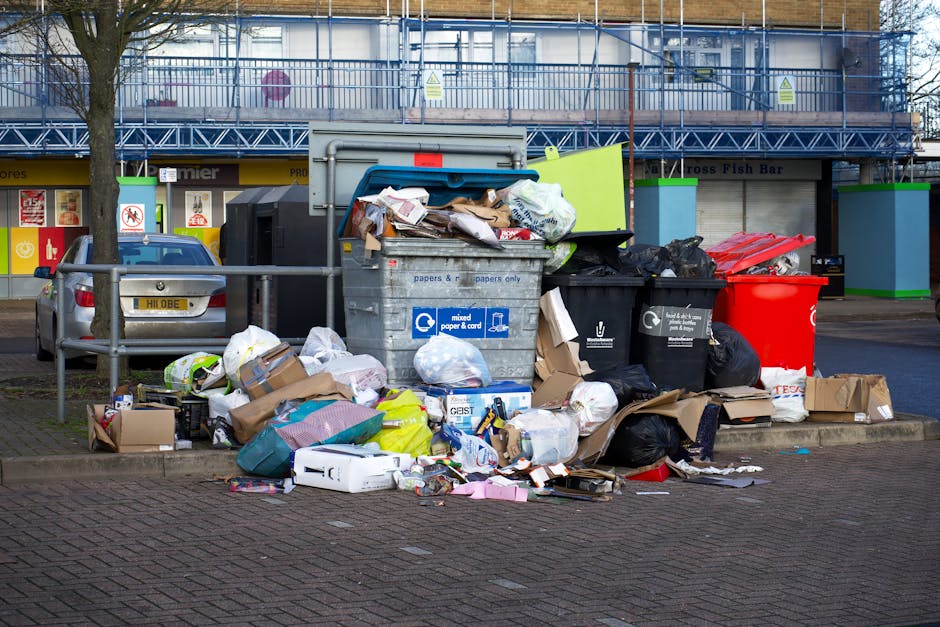
Newington Causeway bulky waste tips Elephant and Castle: a practical local guide
If you are dealing with bulky waste near Newington Causeway, you already know the awkward part is not just the lifting. It is the timing, the access, the parking, the rules, and the small decisions that can turn a simple clear-out into a stressful afternoon. This guide to Newington Causeway bulky waste tips Elephant and Castle is built to help you plan properly, avoid common mistakes, and choose the most sensible disposal option for your situation.
Whether you are clearing a flat, emptying a shop back room, tidying after building work, or dealing with one very stubborn sofa that seems to weigh more than the building itself, the same principles apply: sort first, protect access, choose the right collection method, and avoid leaving the job half done. Let's make it simple.
Table of Contents
- Why Newington Causeway bulky waste tips Elephant and Castle Matters
- How Newington Causeway bulky waste tips Elephant and Castle Works
- Key Benefits and Practical Advantages
- Who This Is For and When It Makes Sense
- Step-by-Step Guidance
- Expert Tips for Better Results
- Common Mistakes to Avoid
- Tools, Resources and Recommendations
- Law, Compliance, Standards, or Best Practice
- Options, Methods, or Comparison Table
- Case Study or Real-World Example
- Practical Checklist
- Conclusion
- Frequently Asked Questions
Why Newington Causeway bulky waste tips Elephant and Castle Matters
Bulky waste sounds straightforward until you try to move it through a narrow hallway, down stairs, past neighbours, and out to a vehicle on a busy London road. Newington Causeway and the wider Elephant and Castle area bring a few extra realities into play: limited space, shared access, time pressure, and the need to keep disruption low. That is why good bulky waste planning matters more here than it might in a quieter suburb.
In practical terms, bulky waste includes items too large for normal household bins. Think mattresses, wardrobes, sofas, desks, shelving, broken appliances, renovation offcuts, and the odd garden item that somehow ended up indoors. If the item is large, heavy, or awkward, you need a proper plan. Otherwise, you get scratched walls, blocked entrances, late collections, and a lot of frustration for very little gain.
There is also a cost angle. A rushed disposal decision can lead to paying for a service that is too large, too small, or not suited to the access you actually have. A bit of planning usually saves money, and more importantly, it saves time. To be fair, that is the bit people most often underestimate.
Expert summary: the best bulky waste result in Newington Causeway is usually the one that matches the item size, access conditions, and timing constraints first, then the price second.
How Newington Causeway bulky waste tips Elephant and Castle Works
The process depends on the disposal route you choose, but the logic stays the same. First, identify what the item is. Second, check whether it is reusable, recyclable, or genuinely waste. Third, make sure it can be moved safely. Fourth, choose the right method for removal. Simple on paper, a bit less simple in real life.
For many homes and small businesses, the options usually sit somewhere between a skip, a wait-and-load collection, a man and van style clearance, or a larger grab hire solution for mixed waste. The right choice depends on access, volume, and how quickly you need the space clear. If the item is a single bulky piece, a targeted removal can be far more efficient than booking a large container. If it is a mixed pile after a declutter, a broader service may make more sense.
One useful rule: if you are likely to spend more time arranging the disposal than actually clearing the space, it is usually a sign you need a better method. Nobody needs a weekend swallowed by a sofa and a fridge, really.
If you are unsure what can go in a container, it helps to review the practical guidance on what can go in a skip and then match the waste type to the service that fits best. For larger mixed loads, skip hire is often the simplest route. For fast clearances where space is tight, wait and load skip hire can be a cleaner option because the waste is loaded and removed without leaving a skip in place.
Key Benefits and Practical Advantages
Good bulky waste handling is not only about getting rid of unwanted items. It is about making the whole job feel manageable, especially in a busy area like Elephant and Castle where access can be tricky and everyone is already working around each other.
- Less disruption: careful planning reduces hallway damage, noise, and prolonged clutter.
- Better access control: you can choose a method that suits narrow streets, loading bays, or limited front space.
- Cleaner results: the room, office, or site gets cleared properly rather than being left half-organised.
- Safer lifting: large items are moved with less strain, which matters more than people admit.
- More predictable costs: when you know the waste type and volume, you are far less likely to overpay.
- Improved recycling potential: separating items early can make reuse and recycling easier.
There is also a psychological benefit. A cluttered room can feel oddly heavy, even before you move a single thing. Clear the bulky waste, and the whole place breathes again. Small victory, but a proper one.
For households, that might mean reclaiming a spare room or finally getting rid of an old mattress that has been leaning against the wall for months. For businesses, it may mean restoring usable storage or clearing the back office after a refit. For contractors, it often means getting a site back under control so the next trade can get on with the job.
Who This Is For and When It Makes Sense
This kind of guidance is useful if you are dealing with bulky waste of any sort in or around Newington Causeway, but it is especially relevant in a few common situations.
- Flat clear-outs: when stair access, lifts, or communal areas make bulky items awkward.
- House moves: when you do not want to take old furniture or broken appliances with you.
- Landlord and letting work: after tenants move out and leave unwanted large items behind.
- Office clearances: desks, chairs, filing units, and electricals can pile up quickly.
- Small renovation jobs: old units, bath panels, broken plasterboard bags, and timber offcuts.
- Shop refits and commercial tidy-ups: the sort of jobs where timing matters and the mess is very visible.
It also makes sense if you are asking yourself a very ordinary but important question: "Can I get this gone without turning the whole day into a logistics exercise?" If the answer is no, a structured removal plan is probably the right move.
For domestic jobs, domestic skip hire is often a sensible starting point. For larger clearances involving trade waste or renovation debris, you may need something more specialised such as builders waste removal or builders skip hire.
Step-by-Step Guidance
Here is a practical way to handle bulky waste around Newington Causeway without overcomplicating it.
- Identify every item. Write down what needs to go. Old sofa, broken cabinet, mattress, appliance, mixed rubbish. Be specific.
- Separate reusable from waste. Some items can be donated, repaired, or moved to storage. Do that first if it is realistic.
- Check for hazardous elements. Certain items need special handling, especially anything with chemicals, refrigerants, or sharp contaminants.
- Measure access. Doors, stair turns, lifts, parking space, and any loading restrictions all matter.
- Estimate volume. A single sofa is not the same as a full flat clearance. Obvious, yes, but easy to misjudge.
- Choose the disposal method. Select skip hire, wait-and-load, man and van, grab hire, or a targeted item collection.
- Prepare the route. Clear hallways, protect corners, and remove trip hazards before anyone starts lifting.
- Load safely and efficiently. Put heavier items in first if using a container, and keep awkward shapes balanced.
- Confirm what happens next. Make sure the waste is removed, sorted, and taken to the right facility or route for recycling.
If you are dealing with a fast turnaround, the practical value of same day skip hire can be hard to beat. And if the waste needs to be collected from a site with limited storage room, grab hire services may be more suitable than a long-stay container.
One small but useful tip: take a photo of the waste before you book. It sounds simple, but it helps you judge size, type, and whether there are any awkward extras hiding behind the obvious stuff. That saved a surprising amount of back-and-forth for more than one customer, truth be told.
Expert Tips for Better Results
After enough clearances, you start to see the same pattern. The jobs that go smoothly are rarely the ones with the newest equipment or the biggest budget. They are the ones where someone thought ahead by about twenty minutes.
- Break down what you can: flat-pack furniture, shelving, and some cabinets take up less room once dismantled.
- Keep wet waste separate: soggy waste gets heavier and messier fast, especially after rain.
- Protect shared areas: a moving blanket, dust sheet, or board can save a lot of apologising later.
- Think about loading order: heavy items first, loose fillers later, and no careless stacking near the top edge.
- Plan for parking: London parking can be the hidden bottleneck. A perfectly good collection can still stall if the vehicle cannot get near enough.
- Use the right service for the job: a full skip is not always the best answer, especially for a single item or a tight loading window.
If noise and dust matter, especially in a shared building, you may find that an enclosed and lockable skip hire option gives more control. For waste that needs to be loaded quickly with minimal onsite fuss, man and van can be a surprisingly neat solution.
One more thing: if the waste is a mix of furniture, broken fixtures, and bagged rubbish, sort it before anyone arrives. That little bit of effort usually pays off. Always does.
Common Mistakes to Avoid
Bulky waste jobs tend to go wrong in the same few ways. Avoid these, and you are already ahead of the pack.
- Underestimating size: "It will fit" is often famous last words.
- Ignoring access constraints: if the item cannot physically reach the vehicle, the booking becomes complicated very quickly.
- Mixing prohibited materials: not everything belongs in the same load.
- Leaving it to the last minute: time pressure leads to rushed decisions and higher stress.
- Forgetting permits or permissions: if a container or vehicle needs space on the public road, the rules may be different from private land use.
- Not separating hazardous waste: a fridge, paint tin, battery, or chemical product may require special handling.
Another common issue is treating all bulky waste as if it were just "rubbish." In reality, different items have different handling needs. A sofa is not a broken tile pile. A fridge is not a bag of textiles. And a bag of mixed renovation waste is its own thing entirely.
If you are dealing with appliances, it is worth looking at fridge and appliance removal. If it is a larger living-room clearance, mattress and sofa disposal can be a more direct route. And if the waste includes anything sensitive, confidential shredding is the safer direction for documents and records.
Tools, Resources and Recommendations
You do not need fancy tools to handle bulky waste well, but a few practical items help a lot.
- Measuring tape: for doors, lifts, stair widths, and item dimensions.
- Gloves: useful for grip and basic protection.
- Dust sheets or blankets: to protect communal areas and furniture you want to keep.
- Dolly or sack truck: helpful for heavy appliances and boxed items.
- Strong bags: for breakable loose waste or mixed small items.
- Labels or markers: to separate keep, donate, recycle, and dispose piles.
On the service side, it helps to understand the difference between the main options. The website's skip sizes and prices page is a useful place to compare container size against the scale of your job. If you need to understand waste quality and sorting, waste recycling services and recycling and sustainability are both worth a look.
For heavier loads from construction or demolition work, options like construction waste disposal, construction waste clearance, or demolition waste removal may fit better than a general household clearance. That distinction matters, because it affects handling, loading, and where the material can ultimately go.
Law, Compliance, Standards, or Best Practice
Bulky waste disposal in the UK is not just a matter of convenience. Waste must be handled responsibly, and you should be careful about what is placed together, where it is left, and who is responsible for it. The exact legal duties can vary depending on whether you are a homeowner, landlord, contractor, or business operator, so it is sensible to stay cautious rather than assume.
In normal practice, a reputable waste provider should work in a way that supports proper segregation, safe loading, and responsible routing of waste. For businesses, keeping a basic audit trail of what left site is sensible. For contractors, safe site setup and access control matter too. For households, the main point is simpler: do not place prohibited or hazardous items into a general mixed load unless you have been clearly told it is allowed.
Best practice usually looks like this:
- separate hazardous items before collection
- avoid overfilling containers or blocking access
- make sure items are safe to lift and move
- use the right service for the waste type
- confirm the provider's payment, safety, and collection terms in advance
That last bit is easy to skip when you are in a hurry, but it is worth reading the practical details on payment and security, terms and conditions, and insurance and safety if you want a clearer picture of how a service is structured.
And if your project involves on-site work, the general guidance in health and safety policy is the sort of page that tells you whether a provider thinks carefully about risks, or just hopes for the best. You can usually tell which is which fairly quickly.
Options, Methods, or Comparison Table
Different bulky waste jobs call for different methods. Here is a straightforward comparison to help you choose.
| Method | Best for | Main advantage | Watch out for |
|---|---|---|---|
| Skip hire | Mixed bulky waste, renovations, room clear-outs | Simple, flexible, good for larger volumes | Needs space and possibly a permit |
| Wait and load | Tight access, short loading windows, busy streets | No skip left on site | You must be ready when the vehicle arrives |
| Man and van | Single bulky items or moderate clearances | Fast, convenient, less setup | May be less efficient for larger loads |
| Grab hire | Heavier or awkward waste piles | Efficient loading from ground level | Needs workable access for the grab vehicle |
| Specialist removal | Fridges, sofas, mattresses, confidential waste | Better handling for specific items | Not ideal for mixed general waste |
If you are clearing a flat or a small commercial unit near Newington Causeway, the deciding factor is often space rather than volume. That is where the choice between wait and load skip hire and man and van becomes very practical. If the job is larger and you can keep a container onsite, then skip hire or builders skip hire may be the better fit.
Case Study or Real-World Example
Picture a small second-floor flat near Newington Causeway after a long-awaited declutter. There is an old two-seat sofa, a mattress, a broken chest of drawers, several bags of mixed household waste, and a printer that no one has used in years but somehow kept moving from one corner to another. Sound familiar? It usually does.
The first attempt might be to simply drag everything downstairs and hope the pavement solution appears somehow. But the better plan is to measure the items, check access, and decide whether a short-loading collection or container-based approach is better. In this type of setting, the smartest choice is often a service that minimises time on the street and keeps the lift or stairwell clear for neighbours.
In a mixed load like this, separating the printer and any electrical items from the general waste is sensible. Sofas and mattresses can often be handled as specific categories, while the drawer unit may need breaking down first to avoid wasting space. Once sorted, the whole job becomes calmer. Less chaotic, less noisy, fewer trips up and down the stairs.
The main takeaway from this example is simple: the right waste method is not always the biggest one. It is the one that fits the space you actually have.
Practical Checklist
Use this before you book anything.
- Identify every bulky item that needs to go
- Separate anything reusable, recyclable, or sensitive
- Check whether any item is hazardous or specialist waste
- Measure access points, stair turns, and parking space
- Estimate how much waste you really have
- Choose the disposal method that suits the space and timing
- Review what can and cannot be loaded together
- Prepare the route from the property to the vehicle
- Protect floors, corners, and shared building areas
- Confirm payment, collection timing, and service expectations
- Keep key contact details handy on the day
If you tick off those steps before collection day, the rest usually feels much easier. Not effortless, just easier. And on a busy London street, that is a win.
Get a free quote today and see how much you can save.
Conclusion
Handling bulky waste around Newington Causeway does not need to be difficult, but it does need a bit of thought. The best results usually come from matching the job to the right disposal method, preparing access properly, and avoiding the classic mistakes of underestimating size or leaving everything to the last minute.
If you are working through a home clear-out, a flat clearance, a refit, or a business tidy-up, the goal is the same: remove the clutter safely, keep disruption low, and make the space usable again as quickly as possible. That is what good bulky waste planning really gives you. A bit of breathing room.
And honestly, once the oversized item is finally gone and the room feels bigger, the relief is immediate. Small things matter sometimes. A clear path, a clear floor, a clear head.
Frequently Asked Questions
What counts as bulky waste in Newington Causeway and Elephant and Castle?
Bulky waste usually means large household or commercial items that do not fit in normal bins. Common examples include sofas, mattresses, wardrobes, desks, appliances, and large mixed clear-out waste.
Is skip hire always the best option for bulky waste?
Not always. Skip hire is great for larger mixed loads, but if space is tight or you only have a few awkward items, wait and load or man and van may be more practical.
Do I need a permit for a skip near Newington Causeway?
If the skip has to sit on public land or the road, a permit may be needed. If it is placed fully on private land, that may not apply. It is best to check the setup before booking.
Can I put a mattress and old sofa in the same load?
Often yes, but it depends on the service and how the waste is being handled. It is wise to confirm the accepted item list first, especially if you are also adding mixed rubbish.
What should I do with a fridge or freezer?
Fridges and freezers usually need specialist handling because they contain components that should not be treated like standard bulky waste. Use a dedicated appliance removal service rather than guessing.
How quickly can bulky waste be removed?
That depends on access, the amount of waste, and the service chosen. In some cases, same-day or next-day removal is possible, but busy periods can change that quickly.
Is wait and load better for flats and narrow streets?
Very often, yes. If you do not have space for a skip and want the waste removed without leaving a container in place, it can be an efficient choice.
Can bulky waste be recycled?
Sometimes, yes. Furniture, metal, wood, and certain appliances may be recyclable or partly recoverable depending on condition and material type. Sorting first helps a lot.
What is the difference between bulky waste removal and house clearance?
Bulky waste removal usually focuses on the large items themselves. House clearance is broader and may include more of the contents of a property, from furniture to mixed household items.
How do I avoid damage when moving bulky waste out of a property?
Measure the route, protect corners and floors, clear obstacles, and do not force oversized items through tight spaces. If an item is awkward, dismantling it first is often the safer choice.
What if my bulky waste includes confidential documents or office items?
Documents should be handled separately through confidential shredding, and office items may be better treated through a specialist office clearance service rather than general rubbish removal.
Where should I start if I am unsure which service I need?
Start by listing the items, measuring access, and estimating volume. Then compare the service that best matches the waste type, space, and urgency. A quick decision is fine; a rushed one usually is not.
If you want to explore service details further, useful starting points include rubbish removal, house clearance, and garage and loft clearance. They cover different kinds of clear-out work, so the right fit depends on what is actually sitting in the room.
When you are ready, a calm plan beats a rushed one every time. And that, really, is the whole game.